

Because of Who He Is
What is our motivation for serving Christ?


The Question
There was a moment in my life when the Lord confronted me with a question that cut me deeper than the faithful wounds of my closest friend. The question would lay bare the true nature of my heart.
What He asked was straightforward: “If I never did another thing for you, would you still serve me?” It’s like He was asking, “Who are you in this for, yourself or for Me?”
Pastors ask questions too.
Sometimes, when pastors get together, there are some standard questions that surface. Questions like, “Where are you located?”, “How long have you been pastoring?” And then the inevitable, “How many people do you have?” As if the size of your church were equivalent to the genuineness of your ministry. Is your church small? Then you must not have the Lord’s favor in your life. In reality, sometimes it is quite the opposite, and besides, they are not our people; they are His. What truly matters is, are we doing what we have been called to do?
I can’t help but think of the Apostle Paul’s words in 2nd Corinthians, chapter 10, verse 12b.
“…but when they measure themselves by themselves and compare themselves with themselves, they are without understanding.”
What is Our Measure?
We all have markers and systems by which we measure success. Whether it’s our success or others’. Sometimes it’s no different in ministry than it is in the corporate world, and I have experienced both. However, the Lord does not measure as man measures.
If I answered the Lord’s question from a purely human perspective, the answer might have been an emphatic no! At least that is, if I weren’t in it for the right reason. Perhaps I would have asked, Lord, what do I gain from this? I’ve tried to be faithful to you; I’ve turned down opportunities for professional careers where I could have earned high salaries. I’ve laid down my life for you, God, when is it my turn? It seems like everyone else’s ministry is prospering but mine. It seems like nobody cares, or carries the vision I carry. Let’s face it, ministry jealousy is a real thing. Yet the deeper truth of the Christian life is something far greater.
Is Our Worship Man-Centered or God-Centered?
As I already mentioned, we humans like to put things into categories; here are a couple for you. Man-centered worship and teaching, or God-centered worship and teaching. Man-centered worship concentrates on what we receive from God, while God-centered worship is based upon our yielding our lives to Him—because He is worthy.
We are to serve God not because of what He does for us, but because of who He is.
Now we’re going to turn the tip of the plow down and dig a little deeper.
Scripture reveals God is the only true source of life. He is not a created being, nor is He dependent on anything outside Himself. God simply is. He exists. There was never a time when He came to be.
If that were true, if at one time God “came to be”, whatever brought Him forth would be greater than He is. When He revealed Himself to Moses, He described Himself with the words, “I AM (Ex. 3:14).” In theological language, this is often called the aseity of God—God’s existence is self-contained.
Everything else in existence is contingent. That’s just a fancy way of saying dependent on something else. God, existing in three persons, is the only one that is not dependent on anyone or anything outside of Himself. This is because God is self-existent. To be clear, what I am not saying is that God is self-created.
So what’s the difference?
Follow me on this one now. If God were self-created, that would mean He would have to have existed before Himself to create Himself. See what I mean? It makes little sense.
We say that God is self-existing, meaning He contains within Himself a quality that we call life. He is the very source of life, and therefore all life comes from Him. So it follows that creation (all things that are, that are not God) exists because God willed it into being and continues to sustain it.
In Him we live and move and have our being (Acts 17:28). Do you hear that phrase? We have “our being”, our existence, solely because of God’s creative endeavor. Therefore, the closer we are to Him, the closer we are to life itself. Of course, then, the opposite would be true as well. The further we are from God, the further we are from the source of life.
I love what the Apostle Paul said in Colossians 1:16-17.
“For in Him (in the Lord – the second person of the Trinity) all things were created, both in the heavens and on earth, visible and invisible, whether thrones or dominions or rulers or authorities—all things have been created through Him and for Him.
17 And He is before all things, And in Him all things hold together (LSB)”.
What a powerful statement of the Lordship of Christ. All things existing have been created through and for the Lord. He is (present tense) before all things, and in Him “all things hold together”. There is so much in this passage—but it is beyond the scope of this present article (We’ll unpack that one another time). Suffice it to say, all things were created for and through the Lord, and it is in Him that all things hold together.
The Lord Jesus Christ is not only the One through whom all things exist, but also the sustainer of everything as well. He keeps a rock, a rock, and a tree, a tree, and so on. You get what I mean. The Lord sustains the physical properties of everything created, including us!
This truth also explains something profound about humanity.
The opening chapter of the Bible states that God created human beings in His image (Gen. 1:26). We, as humans, have distinct characteristics that set us apart from the rest of creation. This comes with a responsibility that is greater than that of the remainder of animate life. This “image” gives us the ability to be analogous to our Creator. That just means that we are similar to Him in a limited way. This analogy between us and Him gives us the capacity to enter into God’s relational presence in an increasingly rich and fulfilling way through Jesus Christ!
Additionally, I believe that there is a second aspect to the image of God in our lives. God intended humanity to represent Him within creation from the beginning so that He might be glorified and His family extended.
Yet, the world shows that something has gone terribly wrong. Damage and distortion have affected the image of God in His human creatures. Man’s rebellion has brought that forth. People still bear His image—every person carries immeasurable dignity and value—but our brokenness has diminished the clarity with which we reflect our Creator.
Temples in the Ancient Near-East typically contained an image of the deity being worshipped. We all know that God disdains them. He is the incomparable God, unique in every aspect concerning His nature and actions. There is no divine being that can make any claim to be greater than Him (cf. Ex.15:11; PS. 86:6-10; IS. 40:18, 25; 46:9).
Nonetheless, there are in God’s temple representative imagers. Guess who they are? Us! Not only are we the images in God’s temple, we are the temple! With the indwelling of the Holy Spirit, we have become the sacred space where heaven and earth meet.
This is why the faithful teaching of the Word of God matters so deeply.
If God is the source of truth and life, then the closer we come to understanding Him in the right way, the closer we come to the life we were created to experience. This means, ultimately, that we become truly human.
However, a false picture of God can develop when people misunderstand or twist Scripture. Teaching a false picture of God is teaching a false god. This causes people to live with false expectations of Him and what He does. It can also lead to anger or a feeling of rejection toward the one that loves us so perfectly. It can result in our worshipping an idol rather than the God of the Bible as He has revealed Himself to be.
For this reason, the careful study and teaching of Scripture is not merely an academic exercise. It is part of God’s work of restoring His people.
I want you to hear this. We have been given the privilege of participating in the restoration of the earth and the renewal of creation. What an honor!
This is the very heart of the ministry in which the Lord has graciously allowed me to serve.
The biblical pattern for Kingdom growth which leads to the fulfillment of God’s purpose is rooted in the words of Ephesians 4:11–13. It is there that the apostle tells us that pastors and teachers are given to equip the people of God for the work of ministry.
Often, when I speak, I ask this question. “Who is to do ministry?” According to Paul, the answer is the people of God. The governmental ministries train and equip the people. The people then do the work of the ministry.
In Ephesians 4, Paul continues this line of reasoning. The apostle tells us that this building up that results, is to continue “until” we come to a place of unity in our understanding of the faith we hold in common, and a full knowledge of the Son of God. Why? That we might grow up individually and corporately—until we accurately represent the One who gave His life for ours. This is the ongoing restoration of the image of God in our lives through the work of the Holy Spirit.
When the Word of God is taught faithfully and lived out fruitfully in daily life, individuals are changed, families are strengthened, communities are transformed, and the Kingdom of God is expressed in the earth.
Much modern Christian teaching from certain camps of the church, emphasizes what we receive from God, such as His blessings, help, and provision. But I ask you, is that teaching God-centered or man-centered?
Someone asked me one time if I would teach a seminar on the Prosperity Gospel. This message has spread like wildfire throughout non-industrialized nations. Why would it not be attractive to those struggling under the grip of systemic poverty?
When preparing the notes for the seminar, I came to a point where I was stuck. Then, strikingly, I heard the voice of the Lord, “Ask them if the gospel they believe is worth dying for?” Think of it. Would you stand in faith, or be willing to be martyred over material possessions? What irony! Giving your life for something you can’t take with you.
Rather, those who have, or will give their lives for their faith, give them for a truth that is much higher than anything that can be made by man on earth. They laid down their lives willingly because He is worthy.
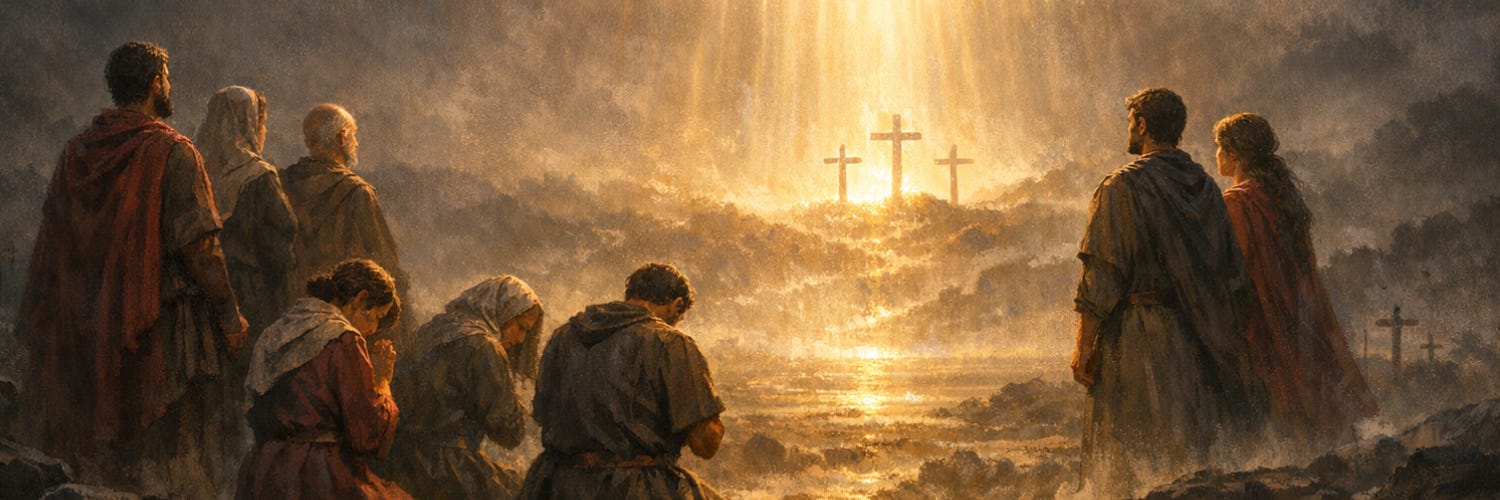
Why did Christians under the rule of Emperor Nero not recant Christ rather than submit to tortures such as being covered in animal skins and torn by dogs? Why did Perpetua and Felicity not recant rather than be killed in the arena in Carthage for their faith? Why did the 21 Coptic Christians in 2015 choose to let ISIS cowards behead them with swords rather than deny Christ? Certainly not for a TV and a nice car. They did it because He is worthy!
He is worthy to be worshipped
He is worthy to be served
He is worthy to be followed
No matter where He leads. Even if it’s to the cross!
We do not follow Him because of what He gives us. We follow Him because of who He is.
“Yours, O Yahweh, is the greatness and the power and the glory and the victory and the majesty, indeed everything that is in the heavens and the earth; Yours is the kingdom, O Yahweh, and You exalt Yourself as head over all (1 Chronicles 29:11, LSB).
this truth stands at the very center of our faith everything flows not just from what God does but from who He is His nature His character His holiness and His love the Bible constantly brings us back to this foundation that our hope our salvation and our confidence are rooted in Him not in circumstances or feelings Hebrews 13:8 says Jesus Christ is the same yesterday today and forever and that means our faith is anchored in something unchanging in a world that is always shifting what really stands out in a theme like this is that we don’t worship God only because of what He gives but because of who He is Psalm 145:3 says great is the Lord and greatly to be praised and His greatness is unsearchable and that changes everything because even when life is uncertain He is still good even when we are weak He is still faithful 2 Timothy 2:13 says if we are faithless He remains faithful He cannot deny Himself so our confidence is not in our consistency but in His character it also reminds me that our identity is shaped by who He is because 1 Peter 2:9 says we are a chosen generation a royal priesthood His own special people that we may proclaim the praises of Him who called us out of darkness into His marvelous light so our lives become a response to His nature not just His blessings and because He is holy we pursue holiness because He is love we learn to love because He is merciful we show mercy and at the center of it all is the cross because Romans 5:8 says God demonstrates His own love toward us in that while we were still sinners Christ died for us this is who He is not distant not indifferent but a Savior who steps into our brokenness and redeems us so in the end our worship our trust and our obedience all flow from this one truth we live not just because of what He has done but because of who He is and that is what makes our faith unshakable and this also gives us deep peace in uncertain times because Malachi 3:6 says I am the Lord I do not change therefore you are not consumed and when everything around us feels unstable we can stand firm knowing that His promises remain sure Numbers 23:19 says God is not a man that He should lie nor a son of man that He should repent has He said and will He not do or has He spoken and will He not make it good so our faith is not fragile because it rests on the unchanging character of God and this draws us into deeper worship and surrender not based on feelings but on truth John 4:24 says God is Spirit and those who worship Him must worship in spirit and truth and because of who He is we can trust Him fully follow Him faithfully and rest in Him completely knowing that He is always good always faithful and always worthy
Excellent reflection, thank you!